


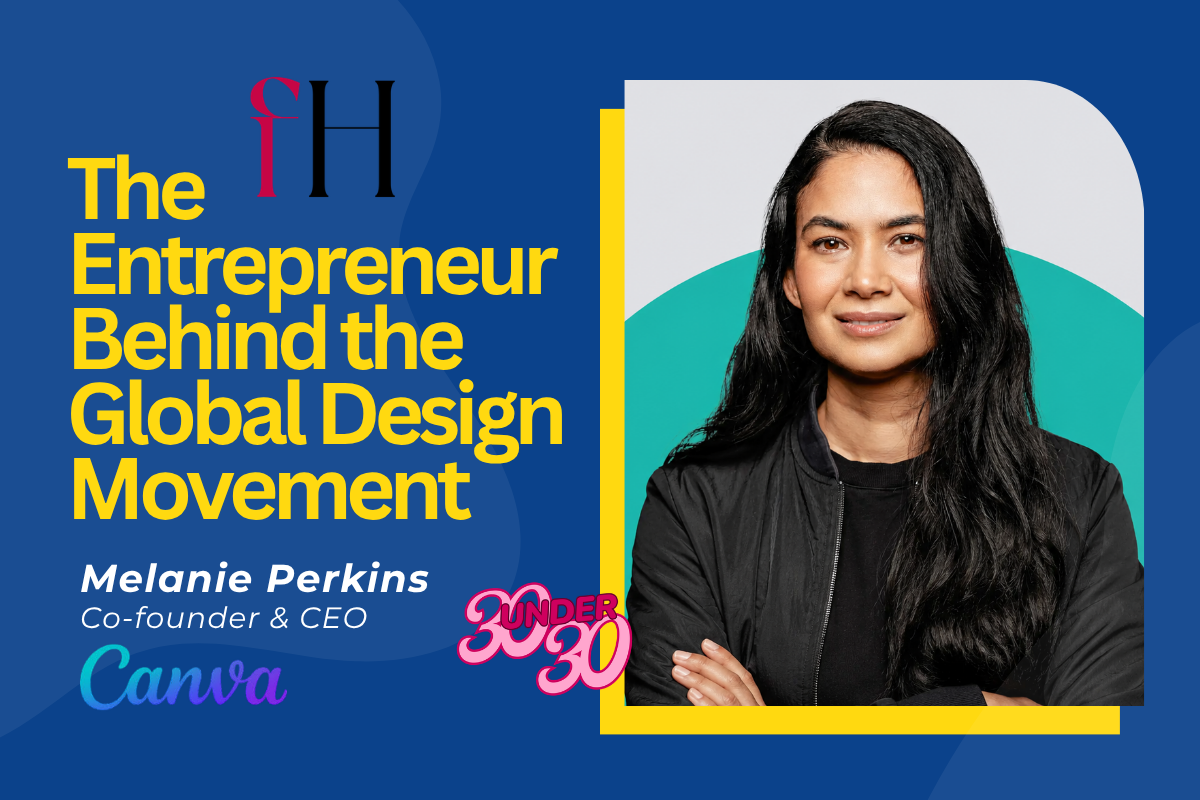
It is rare to find an entrepreneur who has had such a big impact on the current digital age as Melanie Perkins, where innovation and communication are the keys to a company’s success. As co-founder and CEO of Canva, Perkins made the complex world of graphic design simple, approachable and powerful for millions of people around the world. Her story is inspiring. From an Australian university student to one of the youngest self-made female billionaires in the world, her journey is a testament to tenacity, creativity and visionary leadership.
Melanie Perkins is part of a new generation of entrepreneurs who believe technology can facilitate human creativity, not constrain it. She built a platform called Canva that democratized design, allowing businesses, marketers, entrepreneurs, educators and students to create high-quality images without needing sophisticated technical skills. Today, Canva is one of the world’s largest design platforms, with users in over 190 countries.
Educational and Childhood History
Melanie Perkins was born in 1987 in Perth, Western Australia. She showed originality, curiosity and an entrepreneurial spirit from an early age. Her father was an engineer and her mother a teacher, so she grew up in educational and problem-solving surroundings. Growing up in a multicultural household also helped her develop a broader perspective on innovation and communication.
Perkins studied psychology, communications and business at the University of Western Australia. In her college days, she observed that many students struggled with the more sophisticated graphic design tools. Traditional design tools often required technical knowledge, expensive subscriptions and months of training. A simple poster or presentation can seem scary to beginners.
This observation was the seed of her entrepreneurial vision. Instead of assuming that design is hard, Perkins asked a simple but powerful question:
“Why should design be hard for ordinary people?”
The answer to that question eventually changed the course of digital design.
Launching an Entrepreneurial Venture
Melanie Perkins began teaching other students graphic design programs while she was still in college. In these sessions she experienced firsthand the frustrations of traditional design software. She saw a huge need for a user-friendly online design platform.
She thought, rather than wait for someone else to do it, she might as well do it herself.
Perkins co-founded internet company Fusion Books with her lover and later co-founder Cliff Obrecht. The company focused on helping schools make yearbooks with a simple drag and drop digital platform. Most schools at the time operated with old, slow, and difficult systems. Fusion Books made it much easier and became very popular in Australian classrooms.
Perkins was encouraged by the success of Fusion Books, that the idea might take off around the world. That same simplicity could also revolutionize the entire design industry, she thought.
But it was no easy task to build a global enterprise.
Where Canva Originated
Melanie Perkins had a vision for a platform that would allow anyone to create professional-looking designs using simple tools and templates. Her aim was to remove the technological barriers and let everyone be creative.
To bring this vision to life, Perkins and Cliff Obrecht took many trips pitching to investors. Innumerable people rejected them. Many investors wondered if the average person really needed simple design tools. Others said that the market was already dominated by well-established software companies.
But, in spite of these difficulties, Perkins went on developing her idea. Finally, her persistence paid off when she met Bill Tai, a digital entrepreneur who became a valuable investor and mentor.
Canva was officially launched in 2013 with former Google engineer Cameron Adams as co-founder. The platform provided a new way of designing. Canva allowed users to easily drag and drop elements into ready-made designs, no tech skills needed.
The response was dramatic and swift.
Canva attracted hundreds of thousands of users in its first year of operation. It made visual communication so much easier than it ever had been with traditional software and people from all sorts of industries were excited about it.
Revolutionizing the Design Industry
One of the reasons behind Canva’s success is that it understands modern digital communication. Businesses, influencers, students and organizations are increasingly in need of visual content for social media, marketing, education and branding. But not everyone could pay for a professional designer.
Canva filled this gap expertly.
You can use the readily available features of the platform to create presentations, social media graphics, resumes, posters, logos, invitations, films, and much more. No longer did users need to spend years training to create visually appealing content.
What really set Canva apart was their focus on the user experience. Melanie Perkins knew that technology is most powerful when it is empowering and intuitive. Canva focused on being accessible and fast and simple, rather than bogging consumers down in features.
This approach helped Canva expand quickly in international markets.
Every day, millions of people use Canva for personal and professional projects. It’s used by governments, schools, nonprofits, small businesses and big enterprises.
Business Philosophy & Management Style
Melanie Perkins is highly regarded for her leadership style and business success. Unlike many traditional corporate leaders, she promotes collaboration, positivity and a long-term view.
She believes that successful companies are not only about making money, but should also be of great value to society. This way of thinking affected Canva’s corporate culture, which values collaboration, creativity, diversity and employee well-being.
Perkins fosters creativity by creating an environment where employees feel comfortable sharing their ideas. She often emphasizes that the best products come from listening carefully to the user feedback and making continuous improvements.
And her humility defines her leadership style too. Perkins is among the wealthiest female entrepreneurs on the planet, but she is still down to earth and personable. She often credits Canva’s success to group collaboration rather than individual achievement.
Her leadership style echoes a larger shift within modern day entrepreneurship where the value of mission-driven thinking, empathy and diversity is growing more and more.
Obstacles Along the Way
Canva had to overcome many obstacles before it could become a worldwide phenomenon.
Getting investors to buy in was one of the hardest jobs in the beginning. Perkins is said to have faced over 100 rejections from investors before he got major finance. Many investors viewed the design software market as saturated.
The company also faced operational and technological challenges in its global expansion. Canva had to ensure its platform was reliable, fast and user-friendly for millions of users around the world.
The other problem was the competition with big tech companies. Famous brands have more development teams, more market exposure and more resources. But it was Canva that emerged with a laser-like focus on accessibility and simplicity.
In addition, the company had to keep up with the changing digital landscape with the rise of video content, mobile design, remote work, and artificial intelligence.
Despite these obstacles, Perkins remained committed to long-term growth and innovation.
Fostering Innovation Globally
Perhaps the biggest influence was Melanie Perkins’ knack for making regular people feel comfortable to present their ideas.
Before Canva, professional design often felt intimidating and out of reach. A lot of people stayed away from visual communication due to lack of technical know-how. Canva removed these barriers by offering users intuitive tools and professionally designed templates.
Today, teachers create engaging presentations in the classroom. Small firms can churn out marketing materials without the cost of consultants. Students develop portfolios and resumes. Eye-Catching Images Used by Nonprofits to Raise Awareness Lower Cost To Start Brands For Entrepreneurs.
Canva isn’t just about making it easy to create graphics. It has revolutionized the way we communicate ideas visually.
“Creativity should not be the sole preserve of the professionals,” says Perkins. Instead she argues for the provision of resources so that everyone can communicate efficiently and creatively.
With that attitude, Canva became more than a software platform. It became a worldwide movement of inclusive creativity.
Recognition and Worldwide Impact
Melanie Perkins has been recognized internationally for her leadership and entrepreneurial success. She has been named to a number of high-profile business lists, including Forbes’ list of youngest billionaires and list of powerful women entrepreneurs.
Her time at Canva saw it become one of the most successful digital companies founded by a woman, hitting multibillion-dollar valuations.
But her impact is more than material prosperity. Perkins has become an inspiration to female entrepreneurs, particularly those who are breaking into traditionally male-dominated industries like tech and business.
Her experience is a testimony that creativity often begins with everyday problem-solving. And it also reinforces the value of perseverance, resilience, belief in one’s own vision.
Many young entrepreneurs look up to Perkins as her authenticity and purpose-driven leadership built her a multinational corporation.
Philanthropy
Cliff Obrecht and Melanie Perkins have also committed to philanthropy. They were inspired by the “Giving Pledge” movement and pledged to donate much of their wealth to charitable causes.
Their charitable goals are to reduce inequality, support local communities and have a lasting positive impact. Companies have a responsibility to make big contributions to society, Perkins said.
This promise only enhances her reputation as a leader who values social responsibility over creativity.
Melanie Perkins and the Future of Canva
Canva is at the forefront of digital creativity as technology advances. The platform is expanding to incorporate business communication tools, video editing, collaborative workspaces, and artificial intelligence.
Melanie Perkins is still at the helm of the business and is focused on accessibility and innovation. But she hopes to make visual communication easier for everyone on the planet, not just graphic design.
As Canva grows, it suggests there will be more demand for easy to use creative tools in the future. As more people and companies turn to digital storytelling, branding and online interaction, platforms like Canva are essential to modern communication.
Perkins’ entrepreneurial experience is a powerful reminder that revolutionary ideas often start out as creative solutions to everyday problems.
Conclusion
Melanie Perkins has changed the world design industry through her imaginative leadership, innovation and persistence. From teaching design software in college classrooms to building one of the world’s most important technology corporations, her story demonstrates the power of persistence and purpose.
She democratized creativity with Canva, giving millions the tools to express themselves visually with confidence. She is considered one of the most respected businesswomen of her generation for her leadership philosophy, her dedication to meaningful effect, and her commitment to accessibility.
In an ever more digital world, Melanie Perkins is the epitome of contemporary entrepreneurship: innovative, tough, diverse, and international.
Her story remains an inspiration to countless budding entrepreneurs across the globe, showing that a simple idea can indeed change the face of industries and uplift millions of people when combined with persistence and vision.
